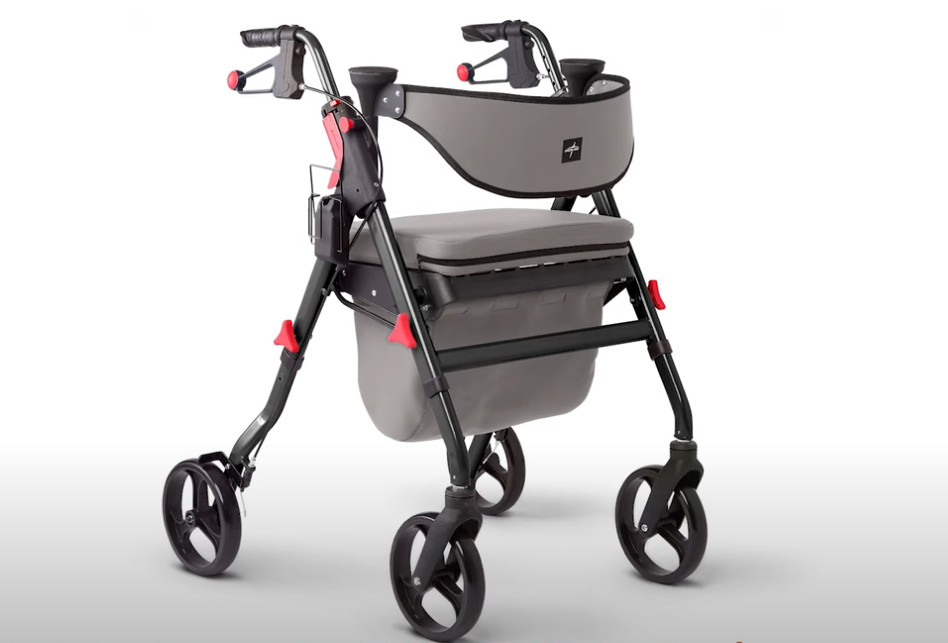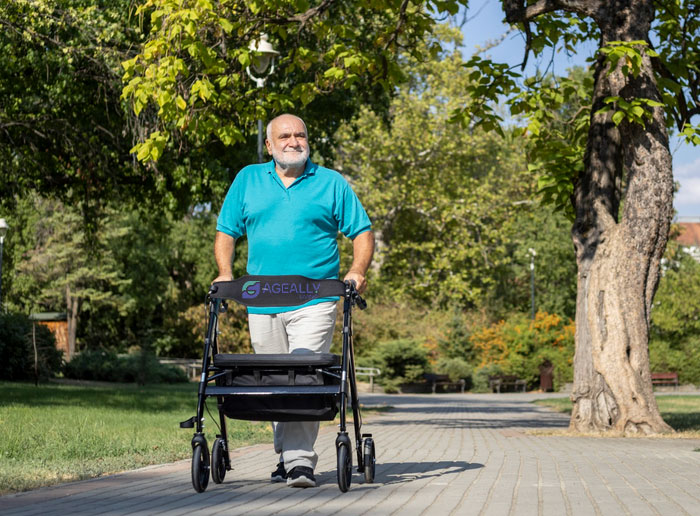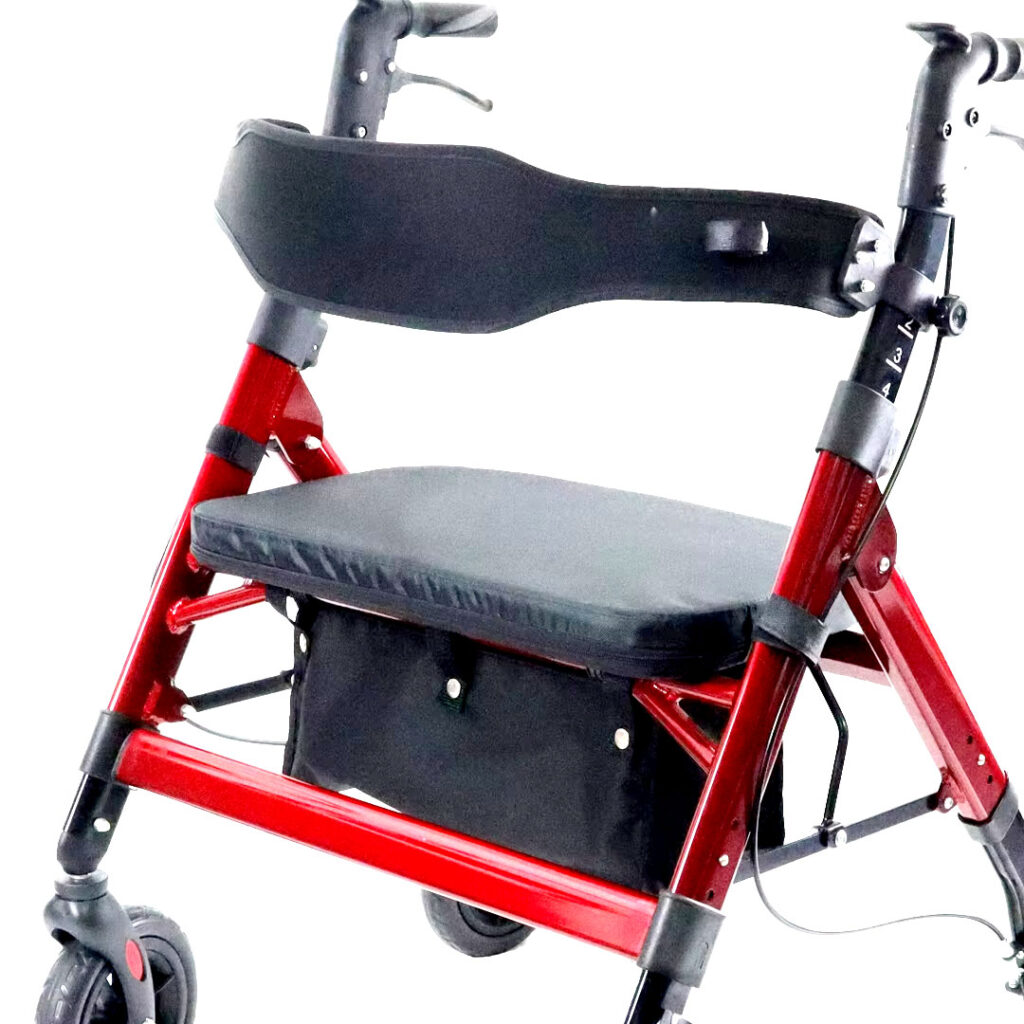

Rollators are designed to provide stability and support, allowing individuals to move around safely. However, selecting the right size is crucial in ensuring that the user is comfortable and safe while using the device.
According to multiple professional guides and product instructions, choosing a Rollator that fits your height requires a combination of the following key steps and measurement methods, as follows:

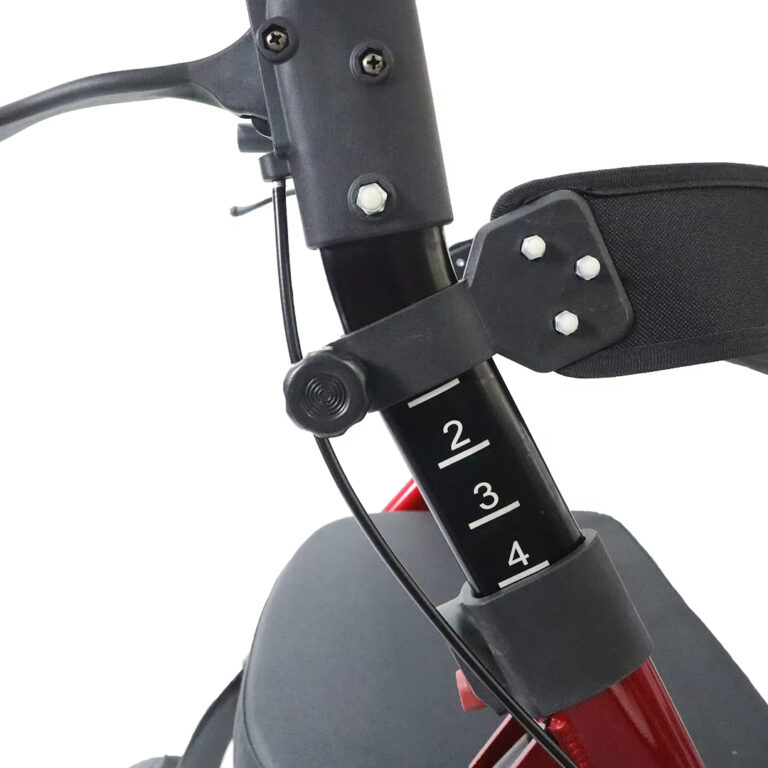
1. Core Measurement: Determine handle height (the most critical step)
1.Measure wrist height
- Stand in everyday walking shoes with your arms hanging naturally and measure the distance from the ground to the crease on your wrist.
- Adjust the height of the walker handle so that the handle is level with the measurement.
- Verification posture: When holding the handlebars with both hands, keep your elbows slightly bent at 15°-30° and avoid bending over or shrugging your shoulders.
2.Reference for height fit range
- Standard: Suitable for users who are 160-180cm tall (5’3″-5’11”).
- Junior: Suitable for 142-157cm (4’8″-5’2″).
- Tall: Suitable for 180-193cm (5’11”-6’4″) users.
Usually here are several distinct rollator sizes available:
Standard: For people from 5’3” to 5’11” (1.6 to 1.8m), usually support 250-300 pounds (113.4 to 136.1kg).
Tall: For people from 5’11” to 6’4” (1.8 to 1.93m).
Junior: For people 4’8” to 5’2” (1.42 to 1.57m).
Bariatric: Depending on the brand, for people from 300 to 700 pounds (136.1 to 317.5kg).
2. Seat height adjustment (Make sure to sit up safely)
1. Measure Your Height and Knee Fossa Height
The first step in selecting the right rollator size is to measure your height accurately. Stand straight with your back against a wall, lift your head, and measure from the top of your head to the floor. Record this measurement accurately, as it will be essential in choosing the right size for you.
Measure : When standing, measure the distance from the ground to the crease at the back of the knee.
2. Check the Rollator's Height
Most rollators come with an adjustable height feature, allowing users to fine-tune the device’s height to best suit their needs.
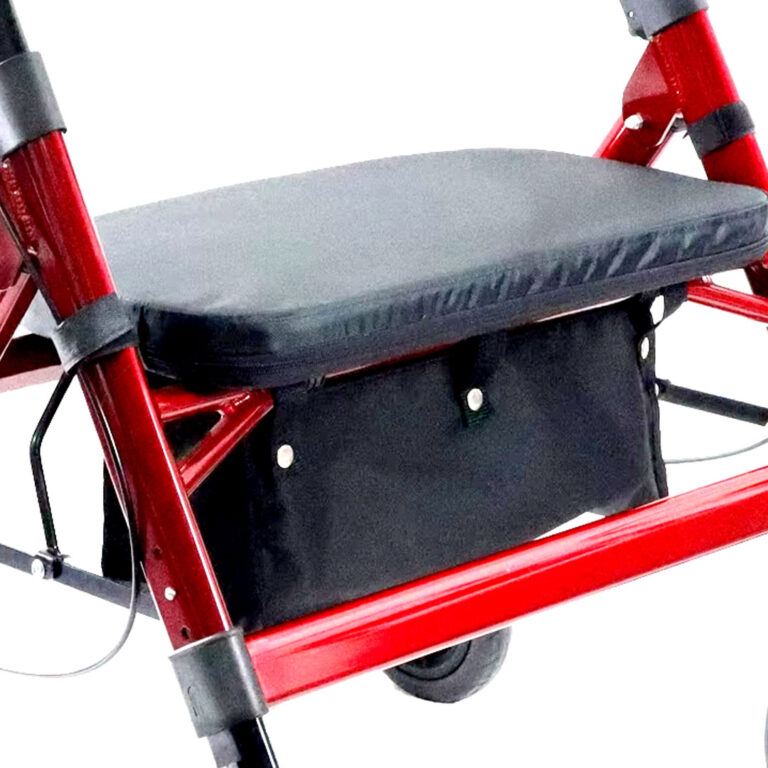
Seat height
When choosing a rollator, it’s important to take the seat dimensions into consideration. While most standard rollator seats are between 13″ and 18″ wide, the inside width of different brand rollators can vary by several inches due to their unique designs. To ensure comfortable seating, measure your backside while sitting on a flat surface and add an inch or two to determine the appropriate seat width for you.
Adjust the seat: Use this value as a reference for seat height to ensure that your feet are flat on the ground when you sit down. If your feet are suspended or curled up, you increase the risk of falling.
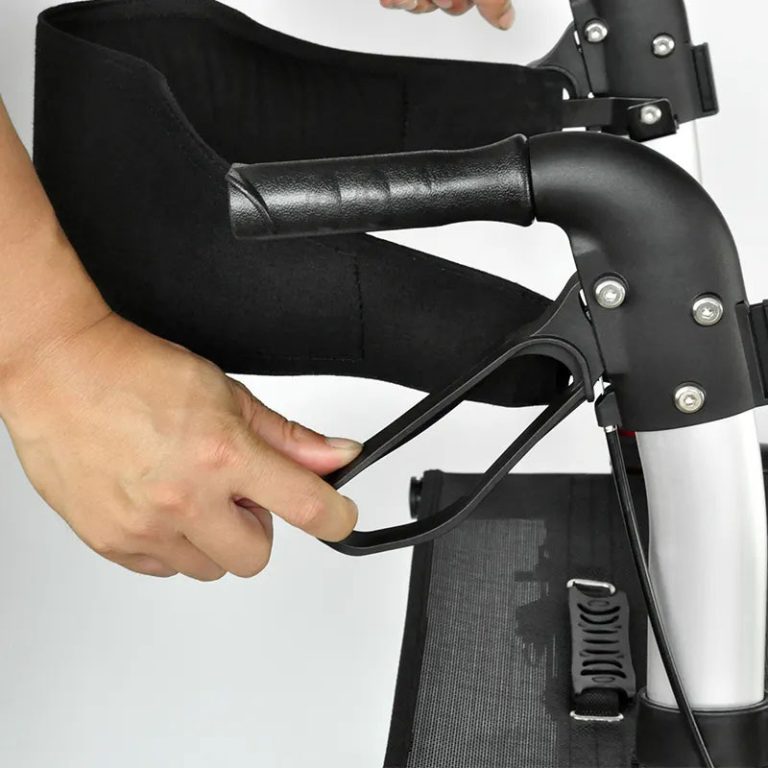
Handle height
The user can find their perfect handle height by standing in their regular shoes with arms at their side and slightly bent elbows. Measure the distance between the floor and center of the wrist while in this position. If you’re taller or shorter, consider purchasing a rollator made specifically for your needs.

Seat to floor height
The height of the seat from the floor should be comfortable for you to sit without your feet dangling. To find out the perfect height, measure the distance from the floor to the back of your knee crease while standing in everyday shoes. This measurement will help you choose a rollator with an appropriate seat-to-floor height.
3. Considerations for Width and Load-bearing Capacity
1.Seat width
- Sit flat and measure the widest part of your hips, adding 2.5-5cm as the ideal seat width.
- The standard width is about 33-46cm (13-18 inches), and overweight users should choose the widened version.
2.Overall Door width compatibility
Make sure your rollator can easily fit through doors and passages you use often. To do this, measure the narrowest spaces in places you go to a lot, like your home, school or workplace.
Measure the narrowest doorways in your home and make sure the walkway is passable when folded. Some models support “half-fold passage”
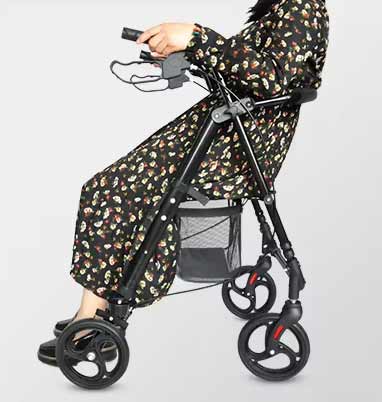
3.Check the Rollator's Weight Capacity (Load-bearing capacity )
When choosing the right size for your rollator, it’s critical to consider its weight capacity. Make sure you select a rollator that can properly support your height and weight. Overloading a rollator can be dangerous and lead to injury, so always check its weight capacity before making a purchase.
- Standard: 113-136kg (250-300 pounds).
- Bariatric: For weights over 227kg (500 pounds), this type must be chosen by those who are overweight.
4. Test-Drive the Rollator
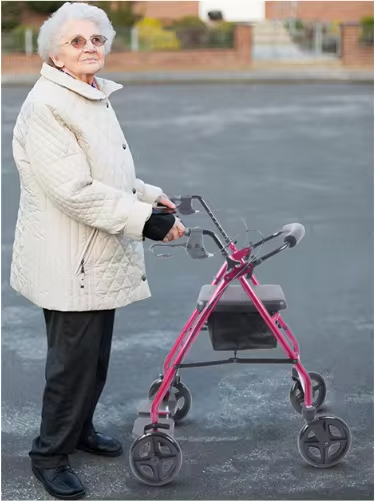
Before purchasing a new rollator, it’s essential to test-drive the device to ensure it meets your needs. Sit on the rollator’s seat, grip the handles, and walk around to get a feel for the device. This can help you determine if the rollator is the right size for your needs and to ensure that you can use it safely and comfortably.
5. Special Requirements and Verification Procedures
- Terrain adaptation: For outdoor use, choose large wheels (>20cm) to enhance stability; for indoor use, choose small wheels.
- Braking system: For those with weak hands, opt for ergonomic curved handlebars.
- Final verification: After adjusting, lock all buttons and test walk to ensure your back is straight and there is no muscle tension.

Important note: If the measurement results are close to the critical value of the size range (such as 178cm height), it is recommended to actually try it out or consult a rehabilitation therapist. Contradictory evidence suggests that some guidelines (e.g.) emphasize seat comfort, but the mainstream standard still takes wrist height as the gold criterion.
As an experienced provider of mobility aids, Ageally takes pride in exceptional customer service and support. Our knowledgeable professionals are always on hand to help you pick the perfect rollator walkers via email or WhatsApp, giving you speedy and thorough answers for smart choices.