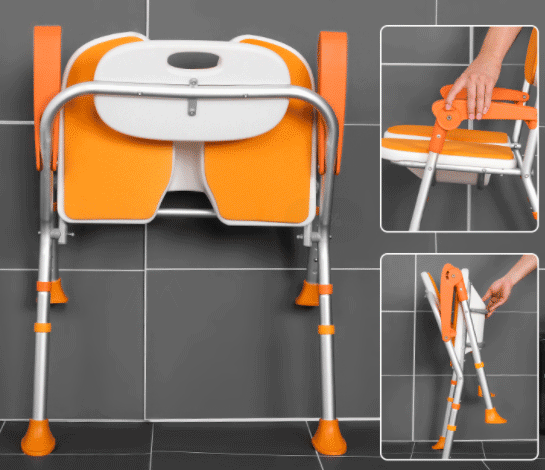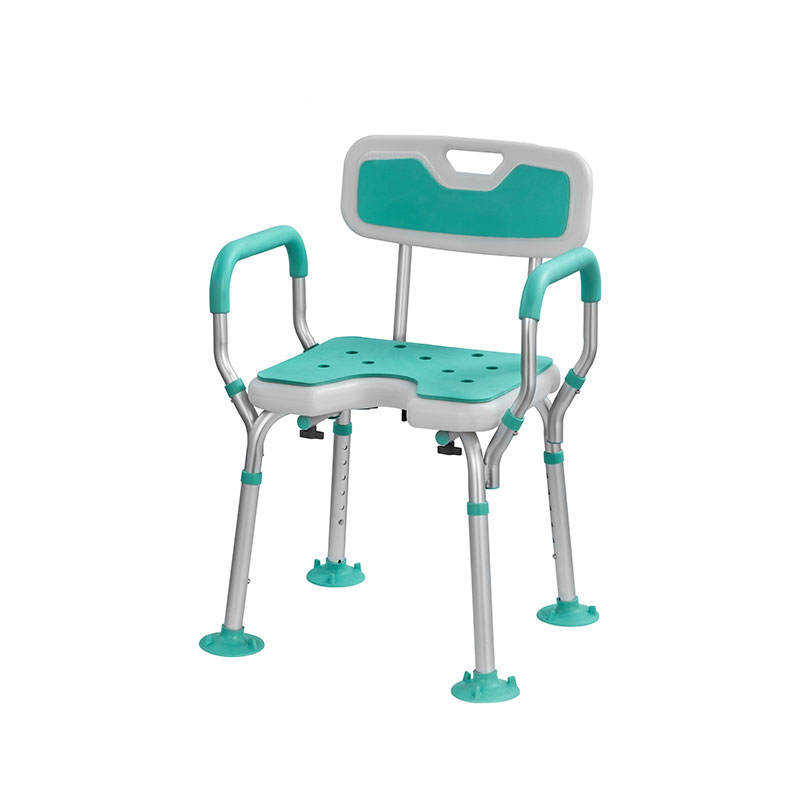

A shower chair is a key assistive device that helps people with limited mobility, such as the elderly, those recovering from surgery, or people with disabilities, stay safe and independent while taking a bath. Proper use of a shower chair not only significantly reduces the risk of falling in a slippery bathroom, but also enables users to perform personal hygiene more comfortably and confidently.
But to make the most of it, every step from installation and setup, sitting position adjustment to safe entry and exit and daily maintenance must be done properly.
Pre-use setup and installation: Make sure the foundation is solid
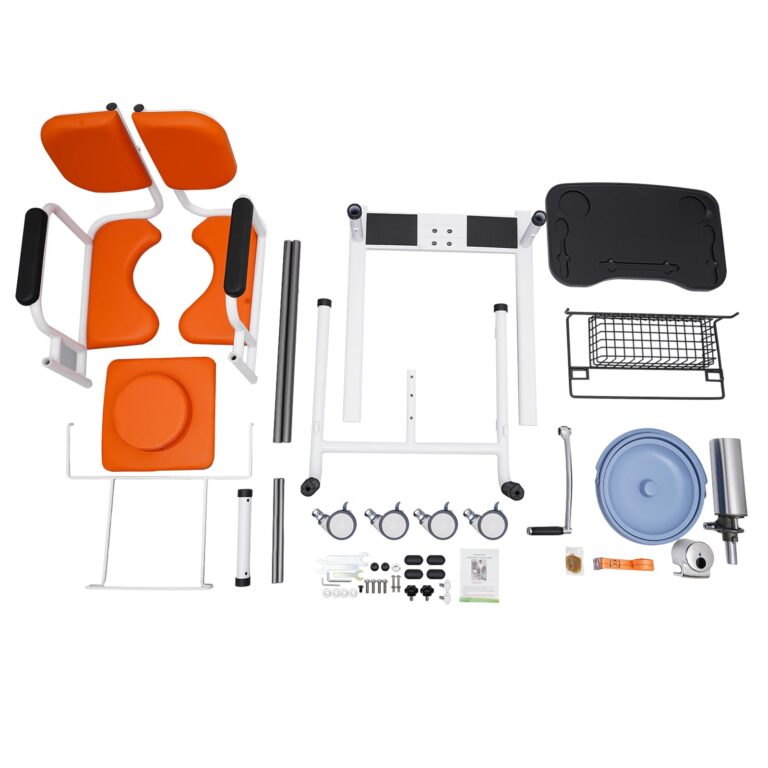
Bath Chair Assembly
Before the first use, the shower chair must be carefully assembled in accordance with the manufacturer’s instructions.
First, remove all packaging materials and protective films. If your chair has a backrest, attach it securely to the seat.
Next, insert the chair legs into the designated holes at the bottom of the seat. Be sure to use the snap or knob mechanism to adjust and lock each leg, ensuring that all connections are tight and secure.
Practical case: When assembling, hearing a “click” indicates that the leg fasteners have been properly fastened in place, which is more reliable than relying solely on visual inspection. Once the assembly is complete, try gently shaking the chair to make sure there are no loose parts.
Ageally Notice: Proper installation is key to ensuring that the bath chair meets the designed performance, and this is particularly important in the daily life of the elderly. Without proper assembly, mobile assistive devices like bath chairs can even pose a potential risk of secondary injury to the elderly or patients, which should be noted by family members or caregivers.
Considerations for Placing the bath chair correctly
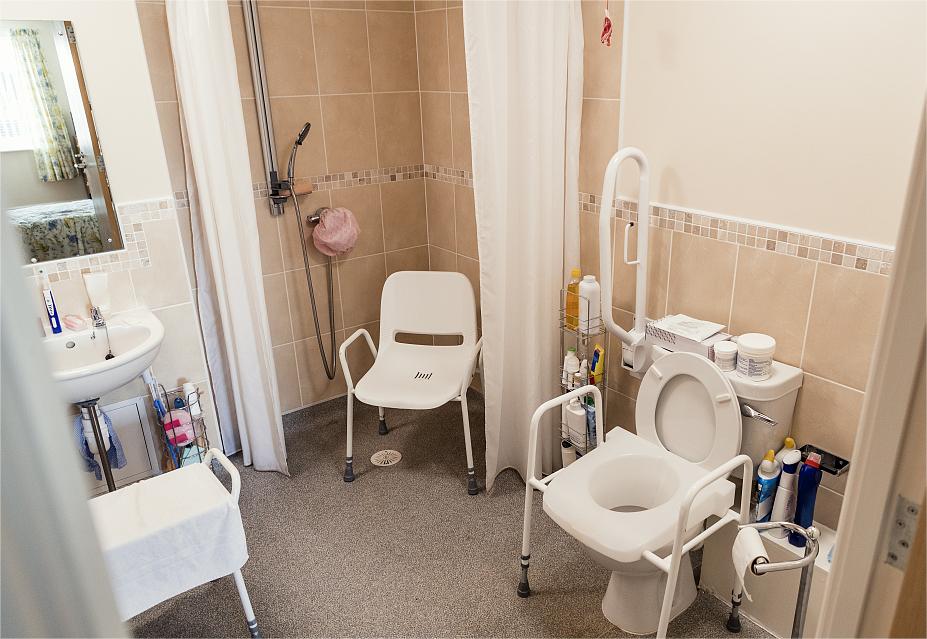
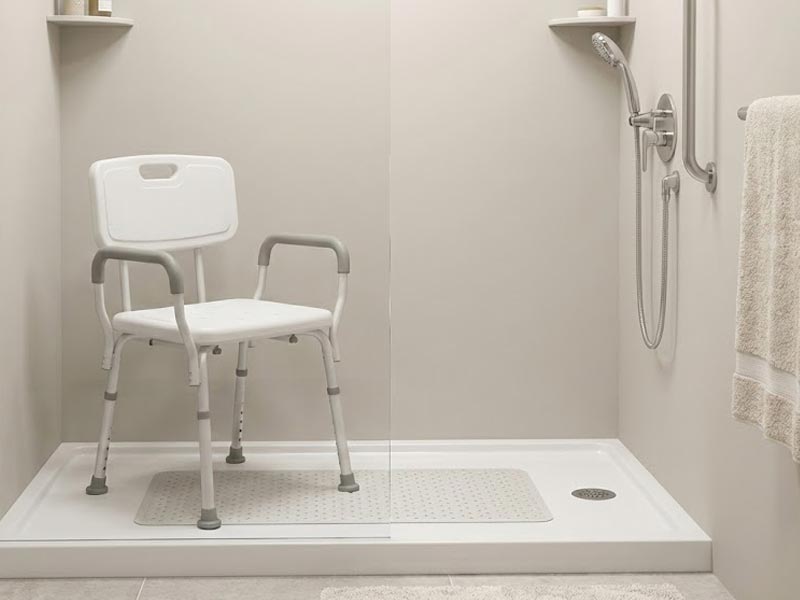
Choose to place the shower chair on a flat, non-slip surface within the shower room or bathtub. The placement is crucial. It needs to ensure that the user has enough space to get in and out and can easily reach the shower switch and grab bar after sitting down.
The key step is to ensure that all four legs of the chair are evenly in contact with the ground. If the ground is uneven, the chair will wobble, posing a serious safety hazard.
Practical tip: At the bottom of some bathtubs, place an extra anti-slip rubber pad under the shower chair to further increase friction, especially when used inside the bathtub.
Final Security Verification

A final security verification must be conducted before anyone sits down. If your chair is equipped with suction cups, make sure they are fully attached to the floor or bathtub surface without bubbles or large areas of water stains.
Then, use your hands to apply a downward pressure test to the chair. The chair should remain completely still without any slippage or wobbling. At the same time, be sure to check the maximum load capacity provided by the manufacturer to make sure it meets the user’s needs. The maximum load capacity of a regular bath chair is 200-300LBS.
Finally, when you start bathing, make sure the chair is not directly exposed to the impact of the initial, unregulated water flow in case the user is startled by the sudden change in water temperature. This comprehensive check is the last line of defense to ensure the safe use of the shower chair.
Bath chair height and placement adjustment: for comfort and convenience

Fine adjustment of bath chair seat height
The height adjustment of the shower chair is a crucial step in ensuring user safety and comfort. The seat height must match the user’s body type and mobility. The ideal height is when the user sits on the chair and their feet can touch the ground smoothly and fully, with the knees and hips roughly at a 90-degree Angle.
If the chair is too low, it will be very difficult to stand up and increase the risk of falling; If the chair is too high, your feet will be suspended, resulting in an unstable sitting posture. Therefore, after the adjustment, be sure to securely lock all the adjustment mechanisms.
Practical case: A simple test: Have the user stand in front of the chair. If the seat height is slightly below the back of their knees, it is usually a height that facilitates a smooth transition between sitting and standing, which helps older people sit down with less effort and have cushioning when they stand up.
Preparations before using the shower chair
Apart from the adjustment of the shower chair itself, the preparation of the surrounding environment is equally important.
The aim is to allow the user to get all the essentials when sitting down without having to twist or stretch much. Place all bath products such as soap, shampoo, bath balls, etc. on the side or side rack of the chair and make sure they are within easy reach.
At the same time, thoroughly clear the surrounding floor and remove any obstacles that could cause tripping (such as extra bottles, cans or pads).
More importantly, make sure that sturdy grippers are installed and in a position that allows the user to easily grasp and provide additional support when transitioning from a wheelchair or standing position to the shower chair and throughout the shower.
Practical tips: For those who frequently use handheld showerheads, make sure the height of the showerhead holder is adjusted to a position that can be easily taken out and placed while sitting in the shower chair, avoiding excessive bending or stretching.
Safe entry and seating: A smooth transition is key
Steps for Using a shower Chair independently
When entering the shower area, be sure to approach the shower chair slowly and carefully. Do not rush. Always put safety first and use grab bars (handrails) to provide stable support throughout if there are installed grab bars nearby.
During movement, especially in slippery conditions, try to maintain the “three-point contact” principle, that is, at least one hand and one foot should always be in contact with the support or the ground. Before entering the shower room, make sure there is no excessive water or soap bubbles on the floor, as this is the main cause of slipping.
Practical case: If the user is moving from the walker to the shower chair, make sure the walker is securely fastened first, and then use the grab bar to approach the chair step by step.
Tips for Sitting Properly in a Bath Chair

When approaching the chair, the user should stand directly in front of the chair facing the seat. Hold the grab bar or the armrest of the chair tightly with both hands. Then, slowly step back until you feel the edge of the shower chair lightly touching the back of your legs. This is an important indication that you can start sitting down.
Next, use the strength of your legs and arms to slowly and steadily lower your body onto the seat, avoiding sudden falls.
Once you are seated, make sure your back is fully aligned and leans against the backrest for adequate support. Only release the grab bar after confirming that you are safely and securely seated in the chair and that your body is balanced.
Practical advice: If assisted by a caregiver, the caregiver should stand behind or to the side of the user, guide and be ready to provide physical support at any time to ensure stability during the transfer.
Tips for Using a shower chair: Stay steady and focused
Proper body positioning and Balance
Once safely seated, the user should maintain an upright posture with the back close to the backrest to provide maximum stability and support. Feet should be placed steadily on the ground or on the pedals provided by the shower chair. Throughout the shower, it is essential to keep your body balanced and ensure that the weight is distributed in the center of the seat.
Absolutely avoid leaning forward or sideways too much to reach for items, as any sharp shift in the center of gravity can cause the chair to tip over or slip.
Practical case: If you need to reach for something on the floor, it’s better to use a tool with a long handle rather than risk bending over or reaching out, or calling a caregiver for help.
Bath chairs bring an efficient cleaning experience
To enhance bathing efficiency and safety, it is recommended to use a handheld showerhead, which allows for more precise control of the water flow direction and avoids getting soaked and slipping.
At the beginning, make sure all essentials (such as shampoo, soap) are within reach. It is recommended to wash the upper body (head, neck, arms) first and then the lower body.
For cleaning the lower limbs and private areas, it is advisable to consider using a long-handled sponge or a bath brush to reduce the need to bend over. If the user has good mobility, they can get up briefly while grasping the grab bar for cleaning;
If you have to wash while sitting, many shower chairs have drainage holes designed to help water flow through. Caregivers can use a wet scrubbing cloth or towel to do a thorough cleaning while sitting.
Essential Safety Tips in the Shower

The most crucial safety rule is: Never stand on the shower chair at any time. The shower chair is designed for sitting load-bearing only. The user should avoid making sudden, quick movements and keep it steady and slow.
When using soap or shampoo, try to prevent foam or water stains from remaining on the seat surface, as residues can make the chair extremely smooth. Before starting the shower, make sure the water temperature is adjusted to a comfortable level to prevent scalding or shock reactions caused by sudden changes in water temperature.
Caregiver guidelines: If the user is a patient in need of assistance, the caregiver must never leave without permission under any circumstances and must continuously monitor the user’s comfort and stability, always ready to provide support.
Safe exit after bathing: Smoothly leave the slippery area of the bathroom

Stand up safely from the bath chair
Standing up safely after the shower is a crucial final step. The user should first move their body (or slide forward) towards the edge of the seat and move their hips to the very front of the seat to prepare for standing.
Next, place your hands firmly on the armrests of the chair or the grab bar installed nearby. Keep your feet apart at shoulder width and steady.
Then, using the strength of your legs and arms, push your body up slowly and evenly. While standing, you must keep grasping the grab bar or handrail until your body is fully vertical and you feel totally stable.
Practical case: If the grab bar is not in the ideal position, you can first place both hands on the sturdy armrests of the chair to stand up, and then turn to grab the grab bar on the wall after standing steadily. Avoid sudden force while standing to prevent dizziness or loss of balance.
Leave the shower area
Every step out of the shower or bathtub after standing firm requires extra care. Raise one leg and slowly, one foot at a time, step out of the shower area or the edge of the bathtub.
Throughout the exit, keep one hand in continuous contact with a support (such as a grab bar or wall) to provide balance and prevent falls at any time.
Once you have fully stepped out of the slippery area, the first step should be on a thick bath mat that is well absorbent and anti-slip.
Practical tips: For bathtubs with height differences, consider using an auxiliary pedal or a dedicated bathtub entry and exit handrail to further reduce the height difference, lower the difficulty of crossing, ensure a steady footing, and avoid grasping the handrail with just one hand.

Maintenance and care of bath chairs: Extend life, Ensure safety
Daily Cleaning of the bath chair after each use
To maintain the hygiene and functionality of the shower chair, a simple cleaning after each use is crucial.
First, rinse the chair thoroughly with clean water to remove all remaining soap, shampoo, and body oil to prevent dirt accumulation and bacterial growth.
Next, dry the seat and chair legs with a towel or cloth, especially the joints and crevices, to prevent water from accumulating.
Pay attention to checking whether there is any water accumulation in the pipe or groove.
Finally, let the chair air dry naturally in a well-ventilated environment to ensure it is dry before the next use.
Regular maintenance and inspection of bath chairs
In addition to daily cleaning, regular in-depth maintenance is also required, usually recommended once a week.
Focus on checking all chair legs and connections for firmness. Carefully check the rubber anti-slip foot pads (or suction cups) at the bottom of the chair legs for signs of wear, cracks, or hardening, as they are key to anti-slip.
Regularly conduct stability tests on the chair – apply pressure and shake to ensure there is no looseness or wobbling. If any screws or connectors are loose, tighten them immediately with the appropriate tool.
Thoroughly clean the entire chair, especially the seats, with a mild disinfectant every month to keep it hygienic. For chairs with suction cups, be sure to check if the suction is still in good condition.
Identify the signal that a bath chair needs to be changed
Shower chairs are not permanent durable goods, and knowing when they need to be replaced is an important part of ensuring safety.
If obvious cracks or structural damage are found in the seat or frame, or if the chair legs do not remain stable no matter how they are adjusted (with persistent shaking), use must be stopped immediately and replaced.
Other clear signs of replacement include: the rubber anti-slip mat is worn out and the hard plastic or metal inside is exposed; There is obvious rust or corrosion on the metal parts, which weakens the structural strength.
In addition, if the user’s weight exceeds the maximum load-bearing limit specified by the manufacturer, it should also be replaced with a stronger, higher load-bearing model.
Practical case: When you find that the chair slides more easily on a slippery floor than before, it is usually a sign that the rubber foot pads are worn out. At this time, you should replace the foot pads or the entire chair immediately.
Important safety reminders and professional guidance for bath chairs
General Safety Tips for Using Shower Chairs
There are several basic safety principles to keep in mind when using a shower chair on a daily basis. When moving the chair for cleaning or repositioning, be mindful to use the correct body mechanics, using the strength of the legs rather than the back, to avoid injury to the caregiver themselves.
It is strictly forbidden for the user or the items on the chair to exceed the maximum weight limit specified by the manufacturer. To prevent the risk of slipping due to moisture, make sure the bathroom is well-ventilated to minimize moisture on the floor.
In addition, the shower area must have adequate lighting so that the user can clearly see the chair and the surrounding environment. If necessary, consider installing additional grab bars to provide more comprehensive support.
Guidelines and Responsibilities for Caregivers to Assist in the Use of Bath Chairs
The duties of caregivers are crucial for users who need assistance. The most fundamental and crucial point is: Under no circumstances should a user be left unattended in a shower chair.
Caregivers must be present to provide the necessary physical assistance when the user is moving in and out. Throughout the shower, the user’s comfort, facial expression and body stability should be continuously observed and monitored. If any discomfort or shaking is detected, immediate intervention should be made.
Before any operation, the caregiver should clearly communicate with the user about the next move to ensure mutual coordination to prevent imbalance caused by accidental movements.
When to seek professional medical advice

A medical professional (such as an occupational therapist) or rehabilitation specialist should be consulted promptly if any of the following situations occur during the use of a shower chair: the user persistently shows difficulty getting on and off the chair, or has obvious balance or stability problems when sitting down.
If you have doubts about the proper setting of the shower chair, height adjustment, or the layout of the surrounding environment, a professional assessment can provide more personalized guidance. Also, professional advice should be sought if it is found that existing bathroom configurations (such as the position of the grab bars, the layout of the shower room) require permanent structural modifications to better fit the shower chair.
When you are unsure about the types, features, or best models of shower chairs available on the market, professionals can recommend the most suitable assistive tools based on the specific needs of the user.
Summary: Three key steps for safe use of a shower chair
The shower chair is a key tool for achieving a safe and independent bath, and its proper use is a systematic process that encompasses preparation, use, and maintenance. Before use, a thorough assembly and safety verification must be carried out to ensure that all components (such as the chair legs and backrest) are securely locked, and the chair is placed in a flat, non-slip area, and it is confirmed to be completely stable and not shaky through a downpress test. At the same time, the seat height should be precisely adjusted according to the user’s height to ensure that both feet can land steadily, and all bath products and necessary grab bars should be placed within easy reach in advance.
During the actual shower, a safe transfer and a stable sitting position are at the core. The user should approach the chair slowly and use the grab bar to maintain support throughout the process until they feel the chair touching their legs before sitting down smoothly. Once seated, maintain an upright posture with your back close to the backrest and make sure your weight is centered to avoid excessive tilting. When taking a shower, use long-handled tools or hold the showerhead to minimize body movement and always keep in mind that you must never stand on the shower chair. Keep in contact with the support, whether entering or exiting, until you are fully stable or safely exit the slippery area.
Finally, continuous maintenance and vigilance are the basis for ensuring the long-term safe use of the shower chair. The chair should be rinsed and dried after each use to prevent soap residue and water accumulation. Regularly check the connections of the chair legs, the wear of the rubber foot pads and the stability of the structure, and replace them immediately if cracks, looseness or rust are found. For caregivers, the user must never be left alone on the chair and clear communication and necessary assistance should be provided throughout the process. If there are persistent transfer difficulties, balance concerns, or questions about the setup, do not hesitate to seek assessment and advice from a professional such as an occupational therapist to ensure that the assistive device provides maximum safety and support.