Choosing and using a shower chair might seem straightforward, but small details can make a huge difference in your daily safety and comfort. Whether you are recovering from an injury, aging in place, or helping a loved one, this time Ageally answers the most common questions about maximizing the utility of your shower equipment.
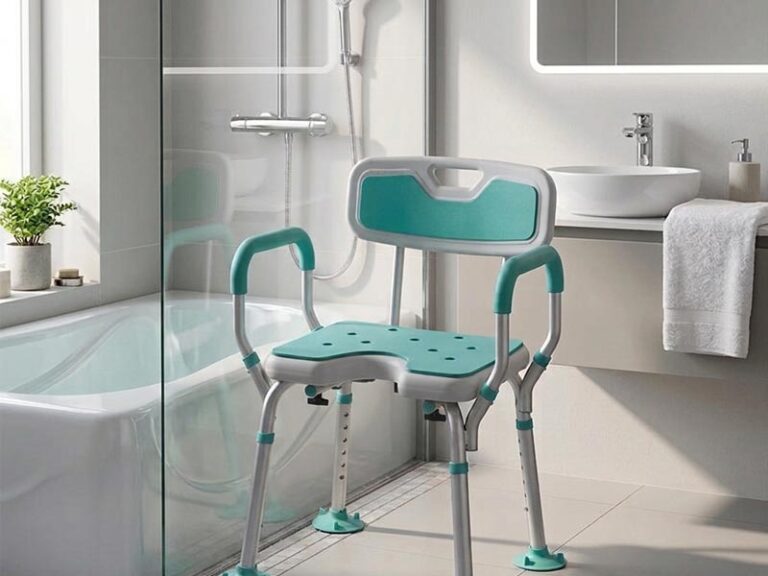
1. How to use a shower chair with a sliding glass door
Using a standard shower chair with sliding glass doors can be tricky due to the narrow opening and the bottom track.
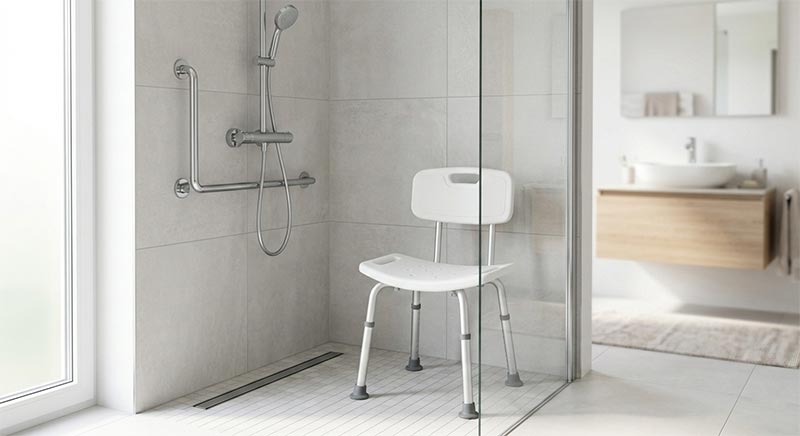
The best approach is to use a sliding transfer bench specifically designed for tight spaces. If using a regular chair, ensure the legs are fully inside the basin and don’t rest on the door track, which could damage the frame or cause the chair to tip.
For maximum safety, some users choose to temporarily remove one sliding panel to create a wider, barrier-free entry.
If your bathroom and pathway are on the narrow side, skip the standard shower chair. It’ll just make things tougher for you and the caregiver.
2. Will a shower chair cause damage to the shower floor?
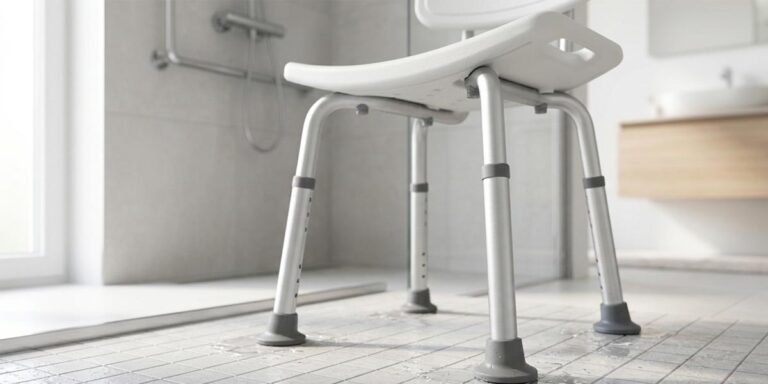
Generally, shower chairs are safe for most floors, provided the rubber feet (ferrules) are in good condition. These rubber tips are designed to grip the surface and distribute weight evenly. However, if the rubber wears down and exposes the metal or hard plastic tubing, it can easily scratch or crack tile, acrylic, or fiberglass surfaces.
To prevent damage, periodically inspect the feet for wear and consider placing a textured, non-slip mat under the chair as an extra layer of cushioning.
3. What can I use instead of a shower chair?
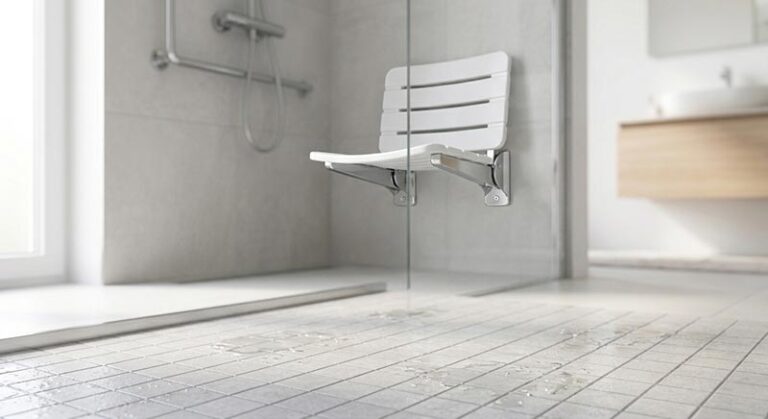
If a dedicated medical shower chair isn’t available, a sturdy plastic patio chair or a heavy-duty resin stool can work as a temporary substitute, provided they have non-slip rubber caps added to the legs.
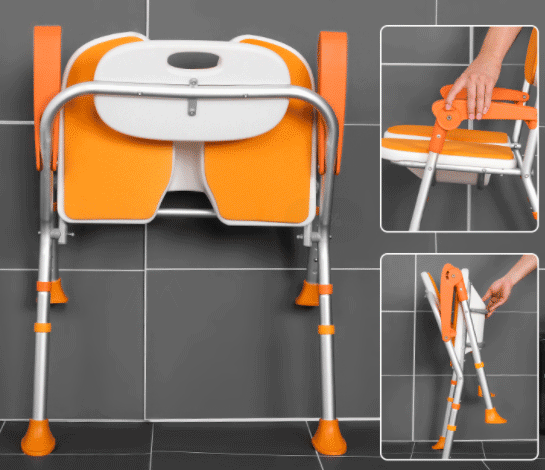
Another great long-term alternative is a wall-mounted folding shower seat, which saves space when not in use. Avoid using standard indoor wooden or metal chairs, as water will cause wood to rot and metal to rust, and they lack the necessary stability for wet environments.
4. Can a bedside commode chair be used as a shower chair?
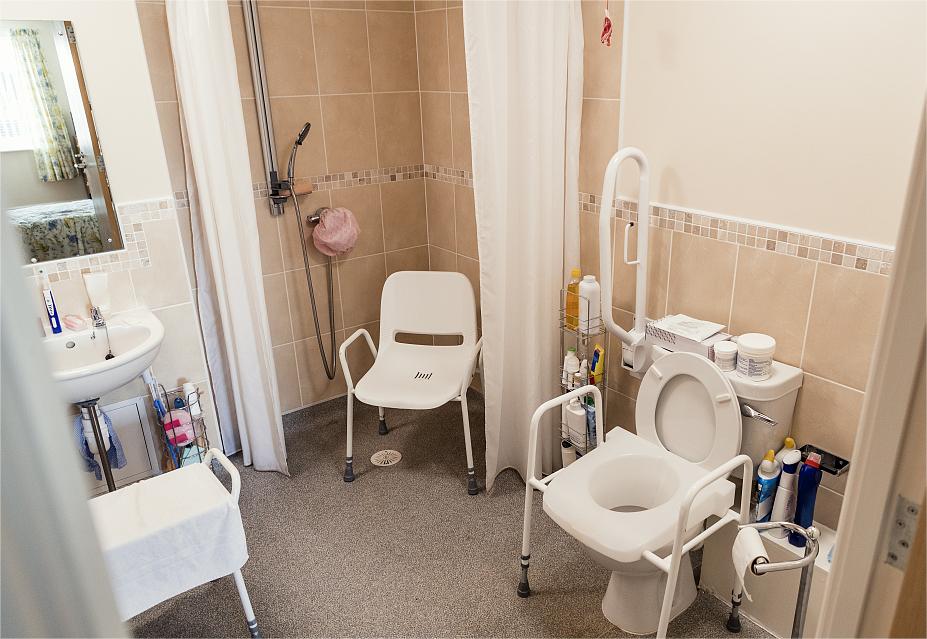
Yes, most bedside commode chairs are designed to be multi-functional and can be used in the shower. They are typically made of rust-resistant aluminum or plastic. Before using it, remove the waste pail and ensure any padded seats are made of sealed, waterproof vinyl to prevent mold growth.
The built-in armrests on a commode actually provide excellent leverage, making it a very safe option for those who need extra help sitting down or standing up in the shower.
5. Can you use a shower chair in a fiberglass tub?
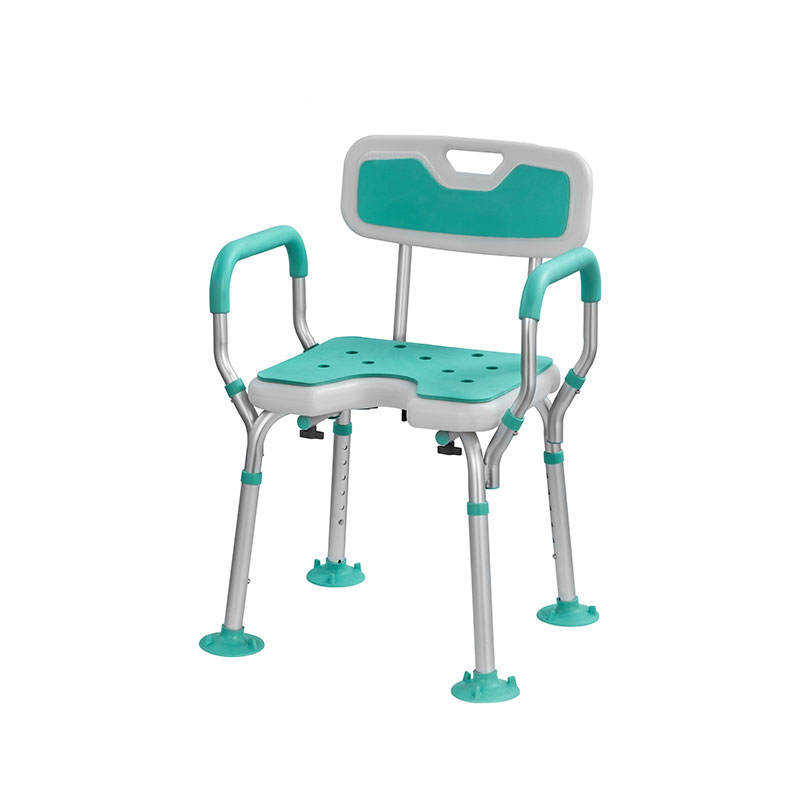
You can use a shower chair in a fiberglass tub, but you must be cautious about weight distribution. Fiberglass is more flexible and prone to cracking than tile or cast iron. Use a chair with wide, soft rubber suction tips to spread the load effectively.
Never drag the chair across the tub floor; instead, lift it carefully to reposition it.
Placing a high-quality rubber bath mat underneath the chair is highly recommended to protect the tub’s finish from pressure points.
6. Can you use a toilet as a shower chair?
No, a standard porcelain toilet should not be used as a shower chair. Standard bathrooms are not designed for the toilet to be part of the wet shower area, and attempting to bathe while seated on a fixed toilet is awkward and dangerous. It poses a high risk of slipping when transitioning to and from the shower.
If you have a roll-in shower, use a specialized “shower commode chair” with wheels, which is specifically built to be safely used over a toilet and then wheeled directly into the shower.
7. Is there a bathtub mat to use with a shower chair?
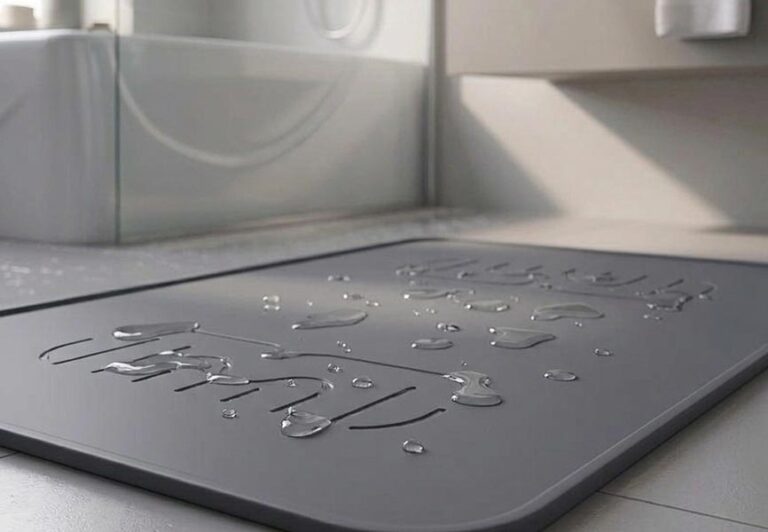
Yes, there are specialized mats designed specifically for use with shower chairs. Look for mats that feature a flat, textured top surface rather than large, bumpy suction cups, which can make a chair unstable.
These mats are often made of heavy-duty rubber or PVC and provide a stable, non-slip foundation for both your feet and the chair’s legs. Make sure the mat is large enough so that all four legs of the chair sit securely on the flat surface.
8. What chair to use in the shower for a broken leg?
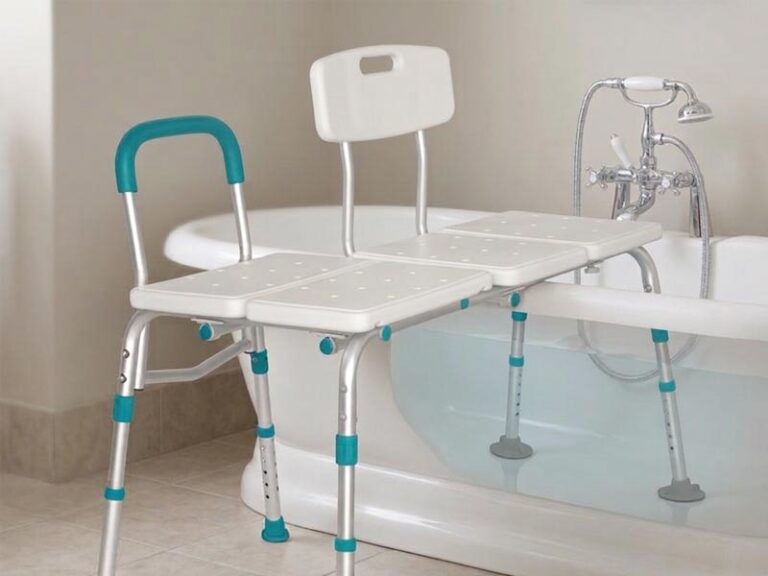
For a broken leg, a tub transfer bench is usually the safest choice. Since you cannot put weight on the injured leg, a transfer bench allows you to sit down outside the tub and slide your body across into the shower area without having to hop or step over the tub wall.
If you have a walk-in shower, a shower chair with sturdy armrests is essential, as it allows you to use your upper body strength to lower yourself safely without putting pressure on your cast.
9. Can I use a seat cushion on my shower chair?
It is not recommended to use a standard cushion in the shower. While the polymer material is durable, the fabric cover is not waterproof and will become heavy, soggy, and prone to mold. More importantly, the cushion can become extremely slippery when soap and water get between the cushion and the plastic seat, creating a fall hazard.
If you need extra padding, opt for a closed-cell EVA foam pad designed for medical use, which is waterproof and slip-resistant.
Investing in the right shower chair—and using it correctly—can transform your hygiene routine from a stressful chore into a relaxing experience. Always prioritize stability, check your equipment regularly for wear and tear, and when in doubt, consult with a physical therapist to find the perfect setup for your specific needs.