Will Medicare Pay for a Shower Chair? What Medicare Covers in 2026
Original Medicare usually does not pay for a standard shower chair. In most cases, shower chairs and bath seats are treated as bathroom safety or convenience items rather than covered durable medical equipment (DME). However, some Medicare Advantage plans may offer bathroom safety devices as supplemental benefits, depending on the plan.
If you are trying to make bathing safer at home, that answer can feel frustrating. A shower chair may be important for stability, fall prevention, and independence, especially after surgery, illness, or injury. But Medicare does not simply cover every item that improves safety at home. Instead, it applies specific rules about whether a product qualifies as medically necessary durable medical equipment.
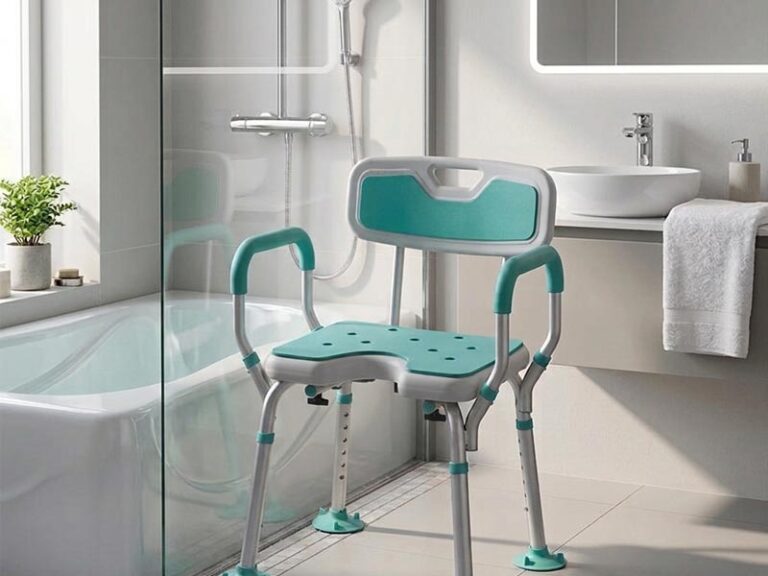
Why Medicare Usually Does Not Cover a Shower Chair
Medicare Part B covers durable medical equipment when the equipment is medically necessary, prescribed by a doctor or other qualified health care provider, and intended for use in the home.
Medicare’s official DME guidance explains that a person with Part B can get DME as long as the item is medically necessary and prescribed for home use.
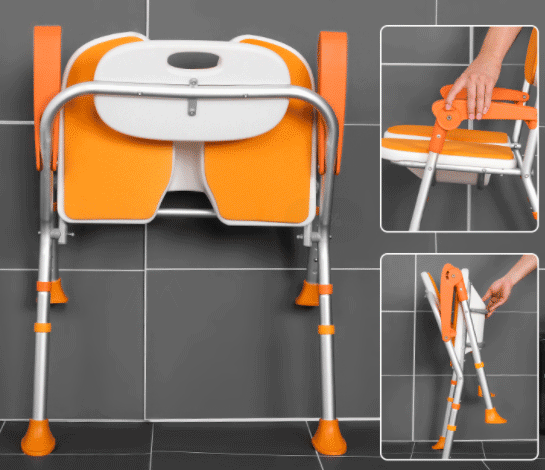
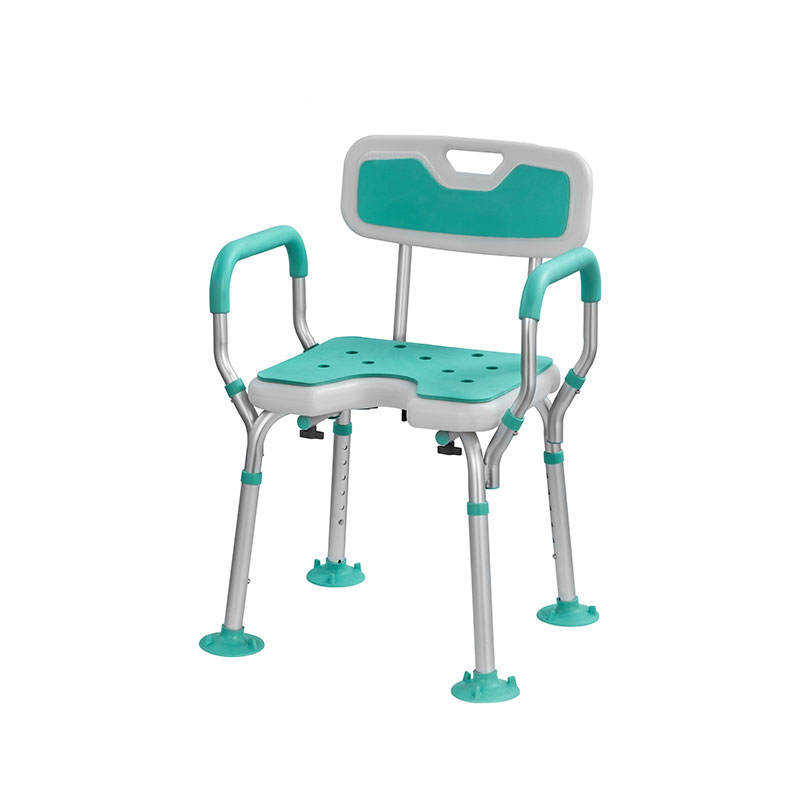
The problem is that standard shower chairs generally do not fall into the category of covered DME. In the CMS DME Reference List, bathtub seats are denied as comfort or convenience items and as hygienic equipment that is not primarily medical in nature. That is the clearest official reason most shower chairs are not paid for under Original Medicare.
In other words, even if a shower chair would clearly make bathing safer, Medicare may still treat it as a non-covered bathroom aid instead of a covered medical device. Safety alone does not automatically make an item reimbursable under Medicare’s DME rules.
What Medicare Does Cover Under Durable Medical Equipment
One reason this topic is confusing is that Medicare does cover many home-use medical devices. Medicare’s DME materials list examples such as canes, crutches, walkers, hospital beds, oxygen equipment, patient lifts, and commode chairs. So it is understandable that many beneficiaries assume a shower chair should also qualify.
But Medicare coverage depends on how the item is classified, not just on whether it is helpful. An item can reduce fall risk and still be excluded if Medicare categorizes it as convenience equipment rather than medical equipment. That distinction is exactly why a walker may be covered while a standard bath seat usually is not.
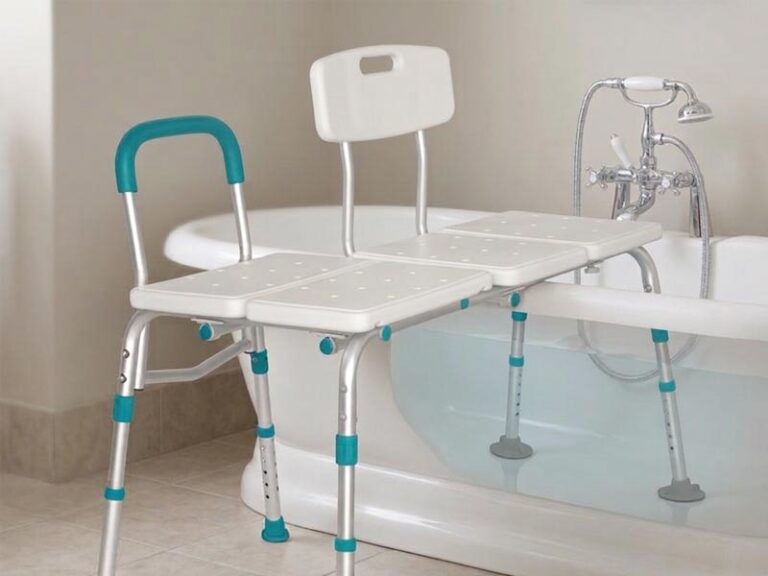
Shower Chair vs. Commode Chair
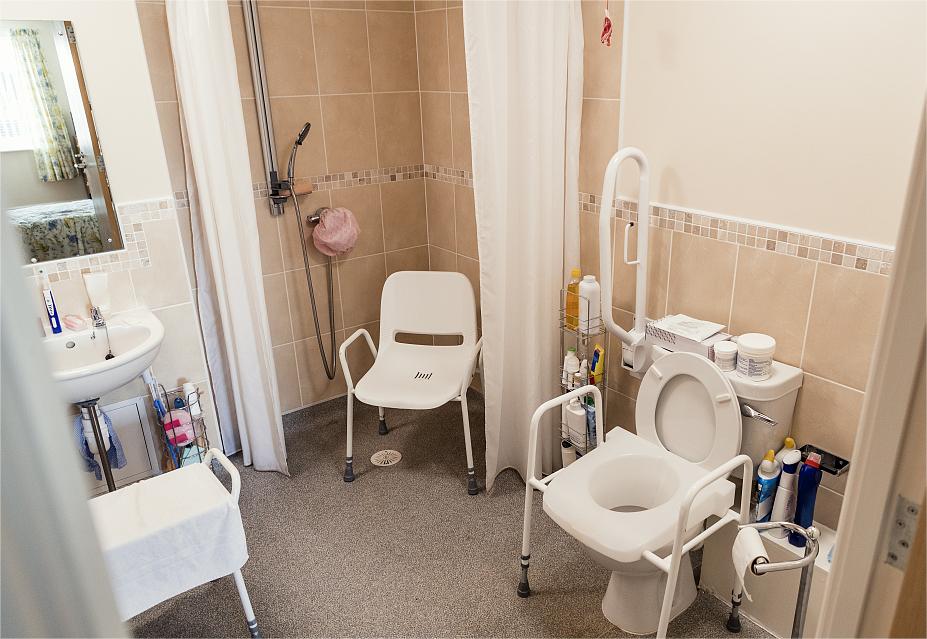
A key distinction for readers is the difference between a shower chair and a commode chair. A shower chair or bath seat is mainly designed to help a person sit safely while bathing. A commode chair, by contrast, is an assistive toileting device, and Medicare’s official DME booklet lists commode chairs among the items Medicare covers.
That does not mean every chair used in a bathroom is covered. The official materials support the opposite conclusion: commode chairs are listed as covered DME examples, while bathtub seats are specifically denied in CMS’s reference list. If you are shopping for equipment, this distinction matters because product descriptions can sound similar while coverage rules are very different.
Are There Any Exceptions?
There is no general Medicare rule saying that ordinary shower chairs are covered if a doctor recommends them. However, CMS does recognize some bathroom-related items in narrow medical circumstances.
For example, the DME Reference List states that a Sitz Bath may be covered when the contractor’s medical staff determines that the patient has an infection or injury of the perineal area and the item is prescribed by a physician as part of home treatment.
That example is important because it shows Medicare can cover certain bathroom-related equipment when the item is tied to a specific medical condition and treatment plan. But it should not be read as proof that a standard shower chair will be covered. In most cases, a regular shower chair remains outside Medicare’s DME benefit.
Can Medicare Advantage Cover a Shower Chair?
This is where the answer may change. While Original Medicare usually does not pay for a standard shower chair, CMS guidance for Medicare Advantage plans says plans may choose to offer specific non-Medicare-covered bathroom safety devices as supplemental benefits to help prevent injuries in the bathroom.
The same CMS manual also says those benefits may include an in-home bathroom safety inspection conducted by a qualified health professional. The inspection can help determine whether a safety device is necessary and appropriate for the beneficiary’s bathroom. That means some Medicare Advantage plans may offer help with bathroom safety equipment even though Original Medicare does not cover the same item.
Because these are supplemental benefits, availability depends on the specific plan. One Medicare Advantage plan may include bathroom safety devices while another may not. If you have Medicare Advantage, the best next step is to check your Evidence of Coverage or call the plan directly and ask whether shower chairs, bath seats, or other bathroom safety devices are included.
What Would You Pay If an Item Is Covered?
For Medicare-approved durable medical equipment, Medicare generally requires that you first meet the Part B deductible and then pay 20% of the Medicare-approved amount, as long as the supplier accepts assignment. Medicare also warns that costs may be higher if a supplier does not participate in Medicare or does not accept assignment.
That cost-sharing rule is useful to know, but it only applies to items Medicare actually covers. Since a standard shower chair is usually not covered under Original Medicare, many people end up paying the full cost out of pocket unless they have another of assistance.
What to Do If Medicare Will Not Pay for a Shower Chair
If Original Medicare will not cover your shower chair, start by checking whether you are enrolled in a Medicare Advantage plan with supplemental bathroom safety benefits. CMS explicitly allows plans to offer those benefits, so it is worth asking before you buy equipment on your own.
You can also ask your doctor or care team whether another item might better fit Medicare’s DME standards or whether a medically necessary alternative is available. Even if the shower chair itself is not covered, your provider may be able to recommend other covered equipment that improves mobility or safety at home.
Finally, if you expect to pay out of pocket, compare medical supply retailers, pharmacies, and local assistance programs. Even though Medicare often will not pay for a standard shower chair, other public or community-based support options may still be worth exploring.
So, will Medicare pay for a shower chair? In most cases, Original Medicare will not. The main reason is that standard shower chairs and bath seats are generally treated as non-covered bathroom convenience or hygiene items rather than covered durable medical equipment. However, some Medicare Advantage plans may offer bathroom safety devices as supplemental benefits, so coverage may still be possible depending on your plan.
If you are unsure about your situation, the safest approach is to verify your benefits before buying. A quick call to Medicare, your Medicare Advantage plan, or your equipment supplier can help you avoid unexpected out-of-pocket costs.
Frequently Asked Questions
Does Medicare Part B cover shower chairs?
No, Original Medicare Part B usually does not cover standard shower chairs. CMS generally treats bathtub seats as convenience or hygienic items rather than covered durable medical equipment.
Are bath seats covered by Medicare?
Usually not. CMS’s DME Reference List says bathtub seats are denied as comfort or convenience items and are not primarily medical in nature.
Does Medicare cover commode chairs?
Medicare’s official DME booklet lists commode chairs as an example of covered durable medical equipment, although coverage still depends on medical necessity and other Medicare requirements.
Can Medicare Advantage cover bathroom safety devices?
Yes, some Medicare Advantage plans may offer bathroom safety devices as supplemental benefits. CMS guidance says plans may choose to provide non-Medicare-covered safety devices to prevent injuries in the bathroom.
How much do you pay for covered DME under Medicare?
After you meet the Part B deductible, you typically pay 20% of the Medicare-approved amount for covered durable medical equipment if the supplier accepts assignment.
Medicare Part B: Medicare Part B is one of the core components of Original Medicare in the United States, primarily serving as medical insurance to cover routine medical and outpatient expenses outside of hospitalization. If Part A covers “hospital costs,” then Part B covers “everyday medical care expenses.”
DME: Durable Medical Equipment (DME) is a core classification term within the U.S. Medicare system, particularly under Medicare Part B. Simply put, it refers to medical devices or equipment prescribed by physicians for patients to use at home over an extended period. To be recognized as “DME” by Medicare and qualify for reimbursement, a device must strictly meet all of the following criteria: Durable, Medical Reason, Specificity, Used in your home.