
Using a bathtub transfer chair allows you to get into the bathtub without having to step over high walls, significantly reducing the risk of falling. Here’s Ageally‘s step-by-step guide on how to install and use a bathtub transfer chair correctly.
Preparations: Place the tub bench shower chair correctly
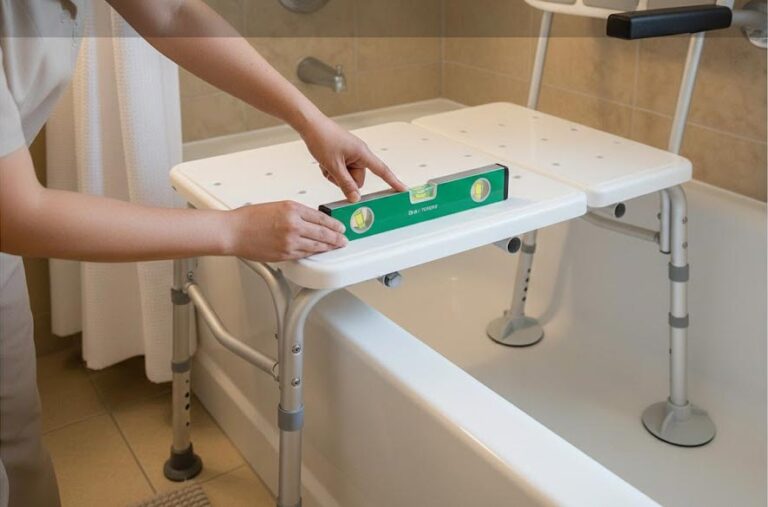
Make sure the tub bench shower chair is placed correctly before your first use. We need to pay attention to the “bridge” placement, placing one leg of the chair in the bathtub and the other leg on the bathroom floor.
The tub bench shower chair you choose must have height adjustment and the maximum height should be higher than the edge of the bathtub. If the tub bench shower chair leans against the wall, you may tip over while taking a bath, posing a safety risk.
Tub bench shower chair leveling: The bottom of most bathtubs is higher than the bathroom floor, so you may need to adjust the bathtub legs so that the outer leg is longer than the inner leg. Using a level or by experience (a simple and effective way to level is to place a smaller ball on the chair to make sure it doesn’t roll around randomly), make sure the bathtub chair is completely level. If the chair is tilted, the continuous flow of water during the bath will reduce the friction between the tub bench shower chair and the buttocks. This may cause you to slip off by accident.
Backrest adjustment: Keep the backrest of the tub bench shower chair always behind you, away from the faucet side, to support your back as you sit facing the shower control device.
Sit down safely: Get into the tub bench shower chair
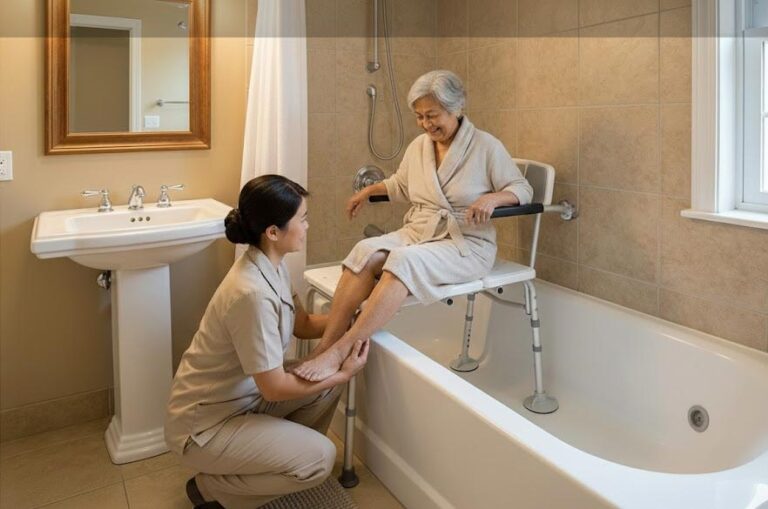
Make sure you remain seated throughout the process of getting into the bathtub.
Determine your position: First move to the front of the tub bench shower chair, stand with your back to the bathtub, and step back until you feel the bench touching the back of your knees.
Slowly sit down: Reach backward and grab the side handles or the tub bench shower chair seat board (be sure not to grab the shower curtain rods), slowly place yourself on the outer part of the bench (the outer part of the bathtub), and make sure your hands have enough support to avoid body wobbling.
Move your body: Move your hips towards the inside of the bathtub, slowly approach the bathtub wall, and make sure your center of gravity is completely inside the bathtub.
Lift one leg into the bathtub: Lift one leg over the bathtub wall at a time and then put it into the bathtub. Once the legs are in the bathtub, slide your hips so that your body is in the center of the bench section inside the bathtub.
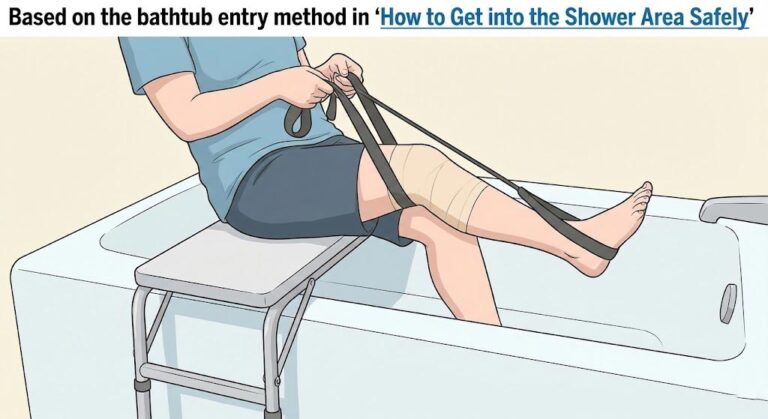
Tips: If you can’t lift your legs on your own, ask a family member or caregiver for help, or use a “leg lift band” or put a towel under your feet and pull your legs up with your arms.
Splash and overflow management during showers
A common problem with the tub bench shower chair is that water can flow out from the bathtub along the legs of the chair, causing the floor to accumulate water and become slippery, posing a risk of falling when standing.
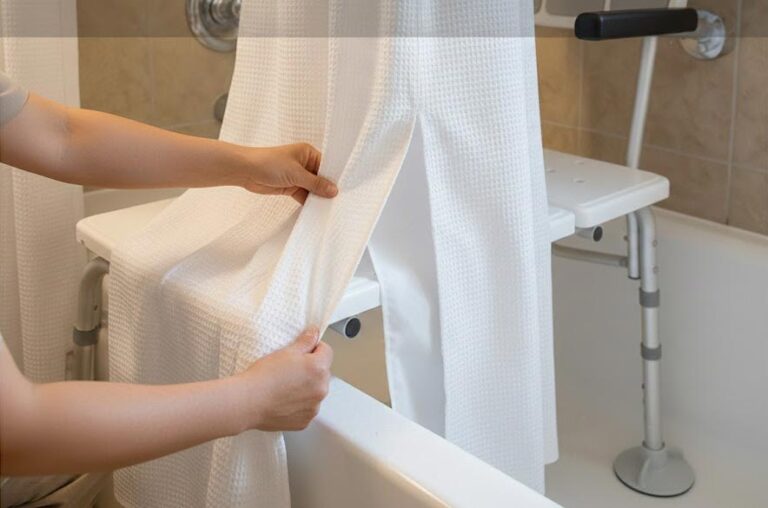
Ageally presents two effective ways to prevent splashing water:
1. Segmented shower curtain method: Roll up the shower curtain, release it to the cushion position of the tub bench shower chair, and tuck the remaining shower curtain into the gap of the tub bench shower chair (the first seat board near the edge of the bathtub) so that the splash can be blocked by the shower curtain in the bathtub. Flow back down the tub bench shower chair to the drain.
If conditions permit, you can also purchase pre-cut dedicated “transfer bench shower curtains”.
2. Use a hand-held showerhead: Using a hand-held showerhead provides better control of water flow and is more effective in preventing water from splashing onto the floor than a fixed overhead showerhead. Keep the showerhead’s spray direction above your body inside the bathtub and control the spray speed to reduce overflow.
Get up and leave the shower area
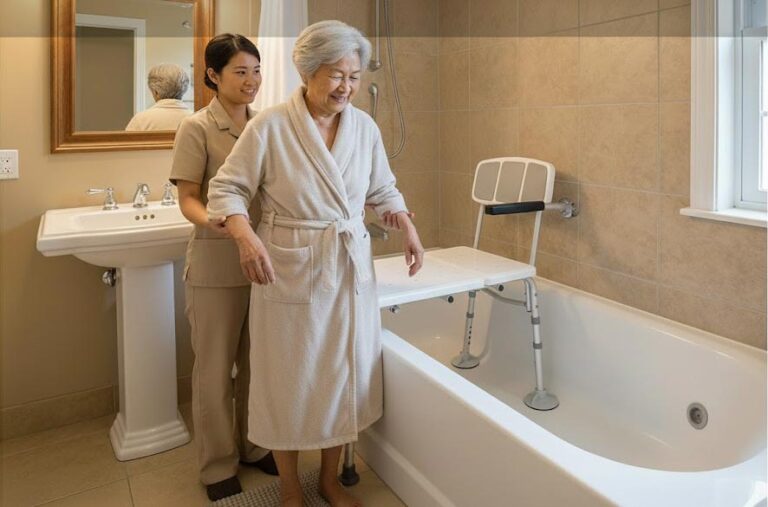
Make sure to remove all possible obstructions before getting up, such as blocked shower curtains, tangled showerheads, towels and other items.
Dry your body: Sit in the bathtub and dry your body to prevent water from dripping onto the bathroom floor (which poses a risk of slipping).
Remove from body: Slide your hips towards the outer edge of the bench over the center point of the tub bench shower chair, making sure one thigh can be easily removed from the bathtub.
Swing your legs: Lift one leg at a time, lift it out of the bathtub and lay it flat on the bathroom floor.
Assist in standing: After both feet are firmly on the ground, forcefully push off the floor or lift up the bench handrail to stand up. Do not move out of the bathtub while standing on one foot.
Tub bench shower chair Safety checklist
Suction cups: Make sure the two legs in the bathtub have large suction cups that are firmly attached to the bottom of the bathtub.
Weight limit: Check the load-bearing capacity of the bench press you are using (the standard model is usually 250-300 pounds, and the obese model has a higher load-bearing capacity).
Do not tilt: Do not sit on the edge of the outer seat if the bench feels unstable. Make sure all four legs are locked in the height setting position.
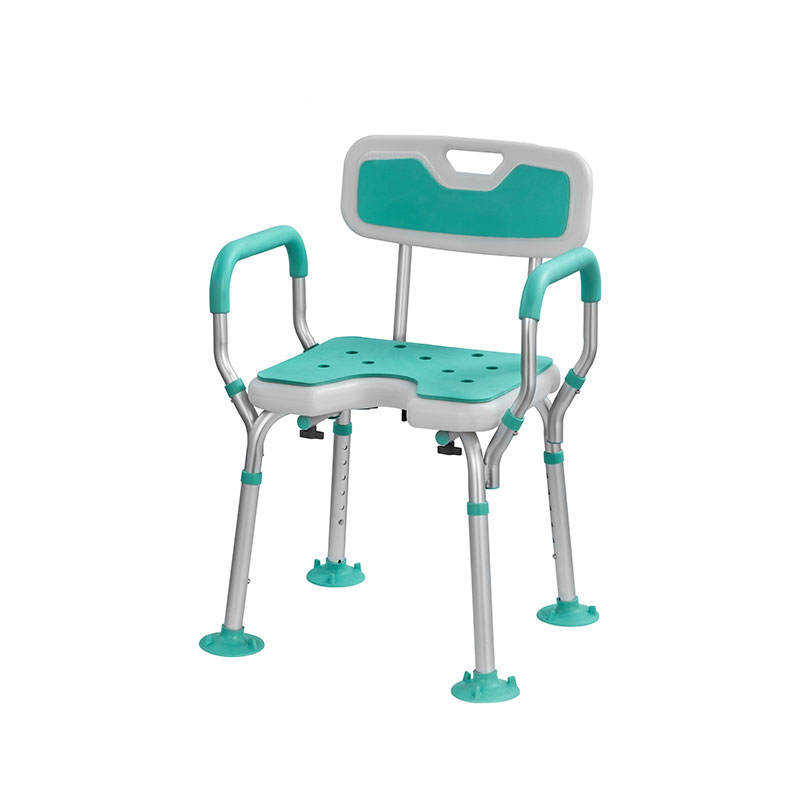
Tub bench shower chair Plastic seat: Plastic seats can be very cold. Ageally’s tub bench shower chair typically comes with EVA foam to prevent direct contact of the buttocks with the cold seat. Or you can put a small towel on the chair to make it more comfortable and reduce skin adhesion, but make sure it doesn’t make you slip too easily.
The above are the steps and key points for using the tub bench shower chair. If you need to purchase the tub bench shower chair or have more suggestions, please contact us.